
Driveway Pavers Orlando: Materials, Design and Process
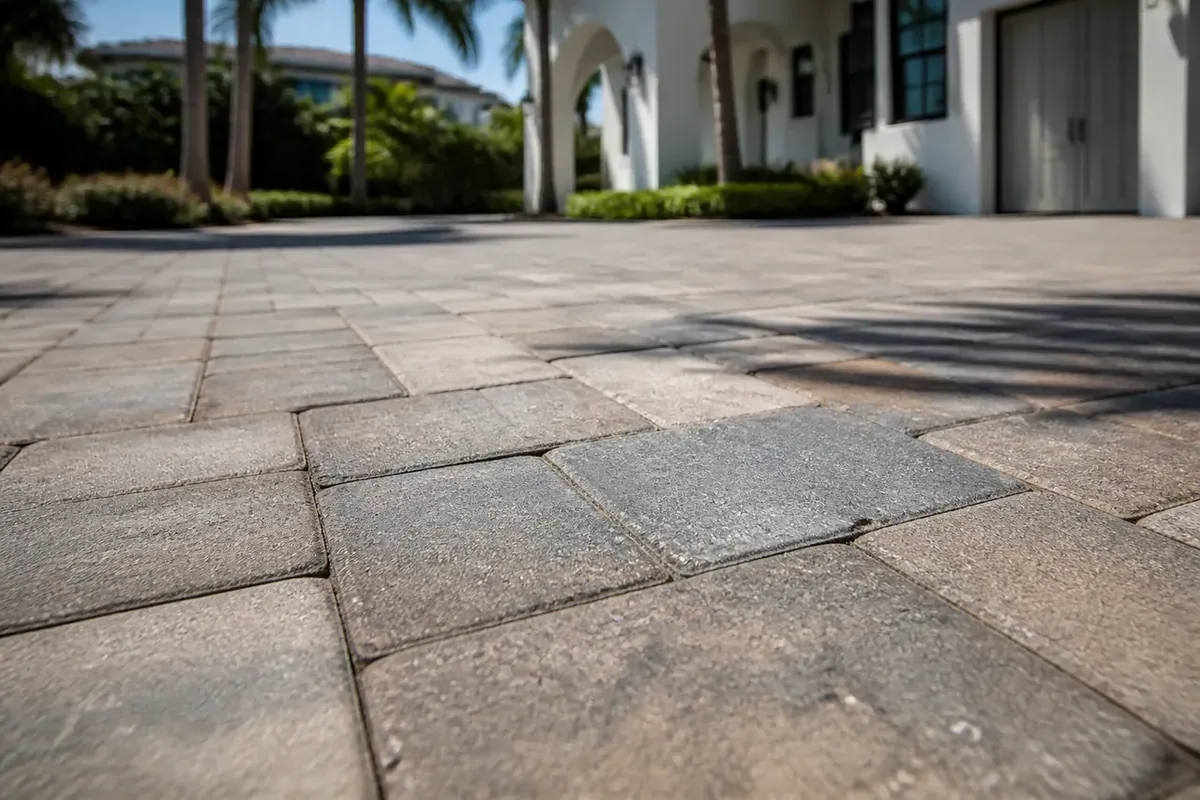
Homeowners comparing driveway pavers Orlando options usually want a surface that looks finished, sheds rain, and holds up under daily vehicle use. Driveway & Paver Solutions builds residential driveways with a clear process: measure the lot, choose materials that fit the load, confirm permit and HOA steps for that address, then install after approvals. This guide covers materials, design choices, base work, timeline, and warranty so you know what a full paver driveway installation includes before you request a quote.
Why Driveway Pavers Work for Orlando Homes
A paver driveway is a field of individual units set on a prepared base, not one continuous slab. That matters in Central Florida, where heat, humidity, and heavy rain put hardscape under constant stress. If a single unit chips or settles, it can be lifted and replaced without cutting out a large concrete panel. Joints between units also absorb small movements that would crack a rigid pour.
For Orlando-area homes, pavers also give more design control. Borders, patterns, and color blends can match the house and the street without locking you into a plain gray apron. The surface stays serviceable for cars when the base, edge restraint, and slope are built for vehicle load. Compared with a failed slab that needs full demolition for every repair, a well-built paver driveway is easier to maintain over time while still delivering curb appeal.
Concrete Pavers vs. Travertine for an Orlando Driveway
Concrete pavers are the primary choice for most residential driveways. They are manufactured for compressive strength under tires, come in many shapes and colors, and cut cleanly for borders and garage transitions. In Orange County, installers typically start with concrete units when the surface must carry daily parking, turning, and occasional deliveries. With the right base depth and joint sand, concrete pavers handle sun and rain without needing a stone that is mainly decorative.
Travertine is a natural stone often used for cool walkways and outdoor living areas. It can work as a driveway surface when the stone is selected for vehicular use, installed on a structural base, and finished with edges that lock the field. Travertine suits homeowners who want a light, stone look and are ready for sealing and joint care suited to porous stone. For driveways, ask whether the specific travertine product is rated for cars, how it behaves under Central Florida heat, and what maintenance the installer recommends. Many projects use concrete pavers for the main apron and reserve travertine for accents or walkways next to the drive.
Driveway Designs: Traditional, Permeable and Grass Strips
Traditional layouts use a full paver field with a border course along the edges. Herringbone, running bond, and basketweave patterns are common; herringbone is often preferred where cars turn because the interlocking layout resists spreading. A darker or contrasting border frames the field and protects the outer courses from wheel wash at the street.
Permeable designs use open joints or open-graded base systems so more rain can move through the surface instead of racing to the gutter. They still need correct grading and a designed drainage path; permeable does not mean “no slope.” Grass-strip driveways leave planting bands between paver tracks or panels. They reduce hard surface area and soften the look from the street, but the paver lanes must still rest on a compacted base sized for vehicle load, and the planting strips need edging so roots and soil do not migrate into the joints. Ask your installer which pattern fits the lot width and HOA palette, and how water leaves the property.
Base, Drainage and Rain: What Makes a Driveway Last
Long service life comes from what sits under the pavers. After demolition or excavation, the crew grades the subgrade, builds a compacted aggregate base, and sets a bedding layer so units sit level. Edge restraints keep the field from spreading under turning loads. Skipping depth or compaction is the usual reason driveways rut at the tire paths or open at the borders after the first wet season.
Drainage is part of that same plan. Central Florida storms dump water quickly; the driveway should slope so runoff moves to the street, a drain, or a designed swale—not toward the garage or foundation. Low spots hold water, stain the surface, and undermine bedding sand. Your contractor should explain slope, transitions at the apron, and how the new surface meets existing sidewalks or the street before the first unit is laid. Paver driveways that last are built as a system: base, edge, joints, and drainage working together.
Permits and HOA Review in Orlando-Area Communities
Permit requirements for driveway work vary by city and by the scope of the project. Driveway & Paver Solutions reviews each Orlando-area address on its own; we do not assume that Orlando, Windermere, Dr. Phillips, or Winter Park always requires—or never requires—a permit. When a permit is needed, design and processing are included at no charge for projects over 700 sq ft. For projects of 700 sq ft or less that still need a permit, the processing fee is $700. Municipal fees are quoted separately and paid to the city or county as required.
Many neighborhoods also need HOA approval before work starts. After you sign, HOA packet preparation is a free service: site plan, material samples, and color choices packaged the way the association asks. Rules differ by community, so the review follows that property’s guidelines rather than a neighboring street. Confirming permit and HOA steps before excavation keeps the schedule honest for paver projects in Orange County.
What Affects the Cost of a Paver Driveway
Several factors change the total without needing a published price list. Area size drives material quantity and crew time. Material choice—concrete pavers versus travertine driveway pavers or mixed layouts—changes unit cost and cutting complexity. Demolition of old concrete or failed pavers, base depth, drainage corrections, custom borders, and permit handling all appear as line items on a written estimate.
Ask for a free written estimate so the scope matches your lot, not a neighbor’s. Driveway & Paver Solutions can discuss Affirm as a financing option where available; approval and terms depend on Affirm’s own review, and no rate or approval is promised here. Comparing contractors on base depth, drainage plan, permit handling, and warranty in writing is more useful than ranking bids by a single headline figure.
Installation Timeline and Warranty
Once any required permit is approved, on-site installation typically runs 3 to 5 days after the permit is approved. That window covers excavation or removal, base work, laying and cutting, joint sand, compaction, and cleanup. Weather, inspections, or multi-area scopes can push a job toward the longer end. Permit wait time is separate from those install days and should be stated clearly so the schedule stays realistic.
Look for a written 1-year warranty on materials and labor. That covers defects in the installed work and the products used for that period. It does not replace normal wear, abuse, or damage from other trades after the driveway is finished. Keep the written terms with your contract. Light aftercare—sweeping, rinsing stains early, and refilling joint sand—helps the surface stay tight through rainy seasons.
Serving Orlando, Windermere, Dr. Phillips and Winter Park
Driveway & Paver Solutions serves homeowners in Orlando, Windermere, Dr. Phillips, and Winter Park. Each project starts with measurement and material options suited to vehicle use, then a clear plan for base, drainage, and any permit or HOA steps that apply to that address. Whether you need a full concrete paver apron, a travertine accent layout built for cars, or a redesign of a failed driveway, the same process applies: written scope, documented approvals, then installation after the permit is approved.
Ready for a site visit and a written plan? Request a free estimate online, or call Driveway & Paver Solutions at (689) 356-6980 for a free estimate.