
Driveway Pavers Miami: A Homeowner Guide
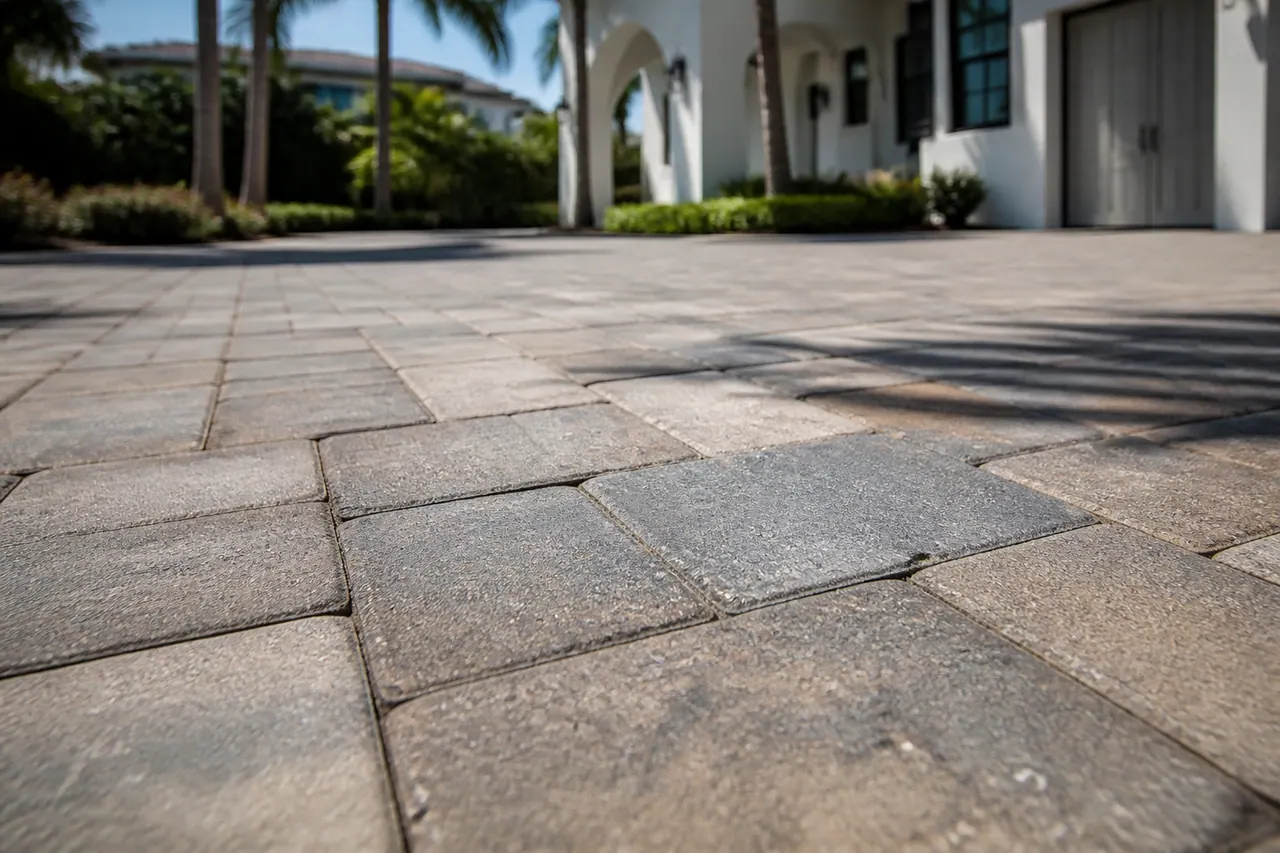
Summer downpours, year-round humidity, and intense UV exposure put hardscapes to the test in South Florida. For property owners researching driveway pavers miami, the real question is not just which paver looks best, but which installation method will hold up in Miami conditions without shifting, ponding, or breaking down early.
At Driveway & Paver Solutions, the focus is on building driveways that perform under traffic, shed water properly, and fit the architectural style of Miami properties. Whether the project calls for travertine, Chicago brick, Oldcastle products, concrete pavers, or porcelain, the installation standards underneath the surface matter just as much as the finished appearance.
Miami driveways fail for predictable reasons
A driveway in Miami-Dade County deals with more than vehicle weight. It also has to handle frequent rain events, high groundwater in some areas, humidity that affects subgrade stability, and in coastal zones, salt air that can accelerate wear on inferior materials and metal components. A driveway may look flat and clean on day one, but if the base is thin or drainage is ignored, problems usually show up fast.
The most common issues include low spots that hold water, pavers that spread at the edges, rutting where vehicles turn, and uneven settling caused by poor compaction. These are not cosmetic details. Standing water can create slip hazards, weaken bedding layers over time, and direct runoff toward structures. For commercial-intent buyers comparing contractors, this is where premium installation separates itself from cheap labor.
- Poor drainage leads to ponding, staining, and erosion beneath the surface.
- Weak base construction allows movement under repeated vehicle loads.
- Missing edge restraints cause pavers to spread and lose pattern integrity.
- Low-quality compaction increases the risk of dips and settlement.
- Material mismatch can shorten service life in humid, salt-exposed environments.
What a professionally built paver driveway should accomplish
A premium paver driveway is not just decorative. It should distribute vehicle loads effectively, maintain consistent elevations, and move water away from the home or building. In Miami, that means the design and installation need to account for both daily use and storm-season stress. The best result is a driveway that looks refined while performing like a structural surface.
Professional installation also helps protect long-term value. A properly installed paver system is easier to maintain and repair than many monolithic surfaces because individual units can be addressed without tearing out the entire area. That matters for owners who want durability, curb appeal, and better lifecycle value rather than a lower upfront number that leads to rework later.
- Cleaner drainage performance during heavy rain.
- Better resistance to cracking than rigid slab systems in many applications.
- Higher curb appeal with a wide range of patterns and finishes.
- Serviceable surface if isolated repairs are ever needed.
- Stronger load support when base depth and compaction are done correctly.
The installation standards that matter most in Miami
Property owners often compare paver colors and patterns first, but the technical standards are what determine whether the driveway stays level and functional. In Miami-Dade County, where rain intensity and soil variability can create drainage and settlement issues, a contractor should be able to clearly explain the structural steps behind the installation.
These are the core standards that should be part of the discussion for driveway pavers in Miami:
- Base preparation (6-8 inches): A driveway needs a properly prepared aggregate base with adequate depth for vehicle traffic. Thin bases are a common shortcut that leads to failure.
- Compaction (98% standard proctor): Proper compaction is essential for subgrade stability and long-term performance. Without it, the driveway is more likely to settle unevenly.
- Edge restraints: Edge restraints help lock the field of pavers in place and prevent lateral movement, especially at borders and turning zones.
- Drainage slope (1/4 inch per foot): Correct slope helps move water away from the surface and adjacent structures rather than letting it collect in low areas.
- Load-bearing capacity: The paver system must be built to support expected vehicle loads, including repeated daily traffic and concentrated turning pressure.
These are not upgrade items. They are baseline requirements for a driveway intended to perform reliably. A premium contractor should be able to explain how each of these standards is addressed before the first paver is laid.
Material selection affects performance as much as appearance
Miami properties range from modern coastal homes to Mediterranean and transitional designs, so material choice matters aesthetically. But in this climate, performance should guide the selection just as much as style. Some surfaces stay cooler, some offer a more textured finish, and some are better suited to specific visual goals or traffic demands.
Driveway & Paver Solutions works with several materials commonly requested for upscale hardscapes. Each has a place depending on the project goals, the surrounding architecture, and the expected use of the driveway.
- Travertine: Popular for its upscale appearance and cooler feel underfoot, though driveway suitability depends on product grade and application details.
- Chicago brick: A classic look that adds character and works well with traditional or historic-inspired exteriors.
- Oldcastle: A recognized option for consistent manufactured paver systems with a range of styles and performance profiles.
- Concrete pavers: Versatile, durable, and available in many colors, shapes, and textures for residential and commercial-style driveways.
- Porcelain: A clean, contemporary choice that can work beautifully when specified correctly for exterior vehicular applications.
The right recommendation depends on traffic, finish preferences, maintenance expectations, and how the driveway ties into adjacent patio pavers, walkways, retaining walls, or pool deck pavers. A contractor should be evaluating the full site, not just selling a surface color.
Drainage and subgrade decisions are where quality shows
Many driveway problems begin below the visible surface. Miami-Dade County properties can present challenging site conditions, including variable soils, flat grades, and areas where stormwater management is critical. A driveway that is not carefully planned can send water toward the garage, trap moisture at the edge, or develop low areas after seasonal rain cycles.
Professional layout and grading should account for how water moves across the property, not just across the driveway itself. The specified drainage slope (1/4 inch per foot) is a key benchmark, but it must be integrated into the actual site conditions. This is also where local permitting and code considerations may come into play depending on project scope, drainage changes, and property conditions in Miami.
Subgrade preparation is equally important. Proper excavation, proofing of the base area, and staged compaction help create a stable platform before the bedding layer and pavers are installed. Shortcut crews often rush this stage because it is hidden when the job is complete. Unfortunately, that hidden work is exactly what determines whether the driveway performs for the long term.
Cheap bids usually cut the parts you cannot see
In the paver market, low pricing often comes from reducing excavation depth, using inadequate base material, skipping compaction passes, or leaving out proper edge restraint systems. Those omissions may not be obvious during the estimate, but they typically show up after the first heavy rainy season or after repeated vehicle loading in the same turning areas.
DIY installation and low-cost labor can be tempting for owners focused on immediate savings. For a driveway, that approach carries more risk than it does on a light-use walkway. Vehicle loads demand a stronger system, and mistakes in grade or compaction are expensive to correct after the surface starts moving. Paying for a proper installation once is usually more cost-effective than paying for repairs, resets, or full replacement later.
- Lower bids may exclude adequate excavation.
- Improper compaction can cause settlement within months.
- Weak edging allows patterns to spread under tire pressure.
- Bad drainage design creates ponding and runoff issues.
- Inferior installation can affect warranty value and long-term maintenance costs.
How driveway pavers fit broader exterior upgrades
A well-designed driveway should not feel disconnected from the rest of the property. In Miami, many owners want a cohesive transition from the front approach to walkways, entry paths, patios, and pool areas. Matching or complementary paver systems can create a cleaner overall design while also simplifying maintenance and future expansion.
This is especially useful for properties planning phased improvements. A driveway project can be coordinated with walkways, retaining walls, or patio pavers so the elevations, borders, and drainage work together. For homeowners in Coral Gables or coastal-style properties near Bal Harbour, continuity in material and layout can make a major difference in curb appeal without sacrificing structural performance.
What to ask before hiring a Miami paver contractor
Before signing a proposal, ask direct questions about structural preparation, drainage, and material suitability. A reputable contractor should be comfortable discussing technical details in plain language. If the answers are vague, or the estimate focuses only on surface appearance, that is usually a warning sign.
For commercial-intent buyers evaluating driveway pavers in Miami, these questions help clarify whether the contractor is building for appearance only or for long-term performance:
- What base depth is planned, and is it within the 6-8 inches standard for this driveway?
- How will the crew verify 98% standard proctor compaction?
- What type of edge restraints will be used at borders and load points?
- How will the 1/4 inch per foot drainage slope be established and maintained?
- How is the system designed for expected load-bearing capacity?
- Are site drainage and permitting considerations being evaluated for the property?
Clear answers to those questions usually indicate a contractor who understands the difference between a decorative surface and a true driveway system.
Choosing long-term performance over short-term savings
In Miami, a driveway has to do more than look good on installation day. It needs to perform through heat, rain, humidity, and regular vehicle traffic without developing the common failures that come from rushed prep work. The best investment is a paver system designed around drainage, structural support, and material selection that fits South Florida conditions.
For owners comparing options, the smartest next step is to review the site with a contractor who can explain the build process in detail and recommend a surface that matches both the property style and the performance demands. Call Driveway & Paver Solutions today at +17863058558 for a free, no-obligation estimate from a trusted Miami paver specialist.